
Break the Silos, Build Trust: Why Safe AI Demands Collaboration, Not Control
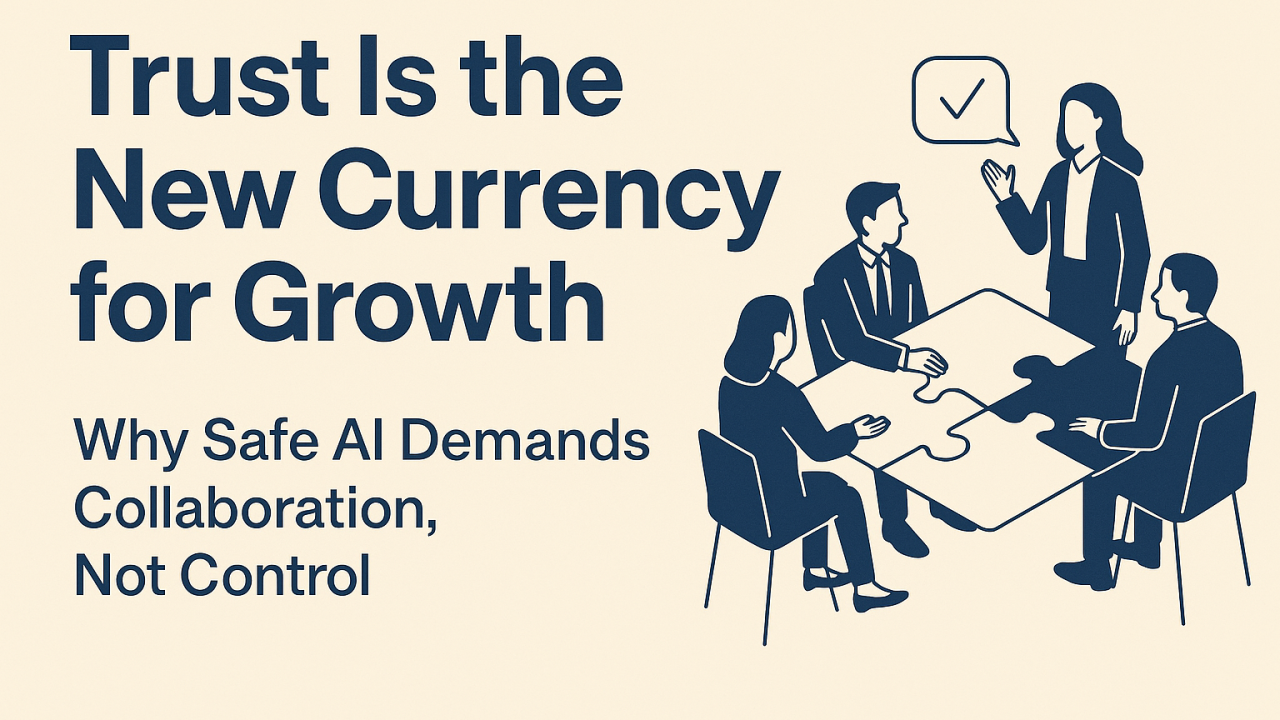
Source: CoPilot
If you’ve heard me speak or read my posts, you know I believe trust isn’t just a nice-to-have, it’s an engine of growth that has become imperative in a world of misinformation and bad data. And in the age of AI, trust is forged not by locking things down, but by opening up: sharing context, collaborating across boundaries, and making governance (just like Privacy) a team sport.
The End of Silos: Why AI Changes the Game
Let’s be honest, most organizations still run on silos. Privacy, security, legal, IT… each with their own playbook, their own language, their own priorities. But AI doesn’t care about our org charts. It moves fast, connects dots we didn’t know existed, and exposes gaps in ways that legacy risk models just can’t keep up with.
When Uber’s surge pricing algorithm hit Chicago’s poorest neighborhoods hardest, it wasn’t a failure of technology—it was a failure of collaboration. No one team saw the whole picture. That’s the risk we all face now.
Trust Starts with Collaboration
Here’s the truth: You can’t govern AI from an island. Trust is built when teams come together, share what matters, and tackle problems holistically. That means:
Learning what matters to other teams. Privacy cares about consent gaps; IT worries about access violations; product wants speed to market. The magic happens when we get everyone at the table and ask, “What does this look like for you?”
Mapping data flows, then asking, ‘What happens when the data creates itself?’ AI generates new outputs, new risks, new questions about consent and purpose. If we’re not talking across silos, we’re missing the plot.
Practical Steps for Leaders Who Want to Build Trust (and Growth)
Form an AI Governance Council. Not just a committee: make it a real forum for sharing, challenging, and aligning. Pool budgets, consolidate tools, and build a single source of truth that can be realistically governed.
Give product teams a Training Data Classification Framework. Red, yellow, green lights for what’s allowed in AI training. Make it simple, make it actionable, and make it a living document that can be seen by all.
Automate evidence, not just controls. Show your work. Track metrics that matter, how fast you can produce audit evidence, how many duplicate controls you’ve retired, how much budget you’ve saved.
Be a sherpa, not a gatekeeper. Guide others through complexity. Teach, listen, and help teams navigate the messy middle between compliance and innovation.
Invest in AI literacy across the organization. The more teams understand AI’s capabilities and risks and how it works, the better they can collaborate by speaking a unified language, spot blind spots, and build trust in new solutions.
Make AI a strategic priority across teams. Don’t let AI live in a tech silo, document and track all initiatives so teams own the outcomes and the risks but the progress and ROI will be reported to the board and leadership team in a consolidated "AI Strategy Roadmap".
Trust Is Built in the Open
The old way, governance as a set of rules handed down from on high, is over. The new way is about transparency, accountability, and continuous dialogue. When teams collaborate, when governance is visible and participatory, trust grows. And with trust comes speed, resilience, and real innovation. Once the internal organizations is confident in how trust is built through strong governance, you can take it to market and make it a competitive advantage with your prospects and clients.
And it does not just matter for your internal operations: contract and MSA negotiations can drag on for extended periods of time through redlining and reworking of contracts if the prospect does not trust a vendor from the start. Instilling a high level of trust early on can expedite how soon you can close a deal and start billing.
My Challenge to Fellow Leaders
If you want to adopt AI safely, don’t just build controls, build bridges. Make trust your north star. The organizations that thrive will be those where governance is a shared journey, not a solo climb.
Source: This article was first published in LinkedIn on November 5, 2025 at https://www.linkedin.com/pulse/break-silos-build-trust-why-safe-ai-demands-control-bettina-s--xbadc/.